
Concrete Crack Repair in Boise, ID — What to Expect
Concrete shrinks as it cures and moves with temperature, so the question is rarely whether a slab has cracks but what those particular cracks are telling you. Fine, tight, evenly distributed shrinkage cracking is common and often cosmetic — but width, pattern, location, and whether a crack is still moving are what actually separate a cosmetic crack from one reporting a larger problem. Cracks that are widening, offset in height between the two sides, or running through a slab that was jointed properly are saying something different.
The distinction matters because filling changes nothing about the cause. A shrinkage crack in a stable slab can be sealed and forgotten. A crack caused by settlement underneath will reopen through whatever it is filled with, usually within a season, because the slab is still moving. The filler is not failing; it is reporting.
Sealing does still matter on cracks that are stable. An open crack in a freeze-thaw climate takes in water, which freezes, widens it, and starts working on the base underneath. Sealing a stable crack stops that cycle. Sealing an active one just hides the evidence while it continues.
What Is Included
- Crack pattern read for what it indicates before anything is filled
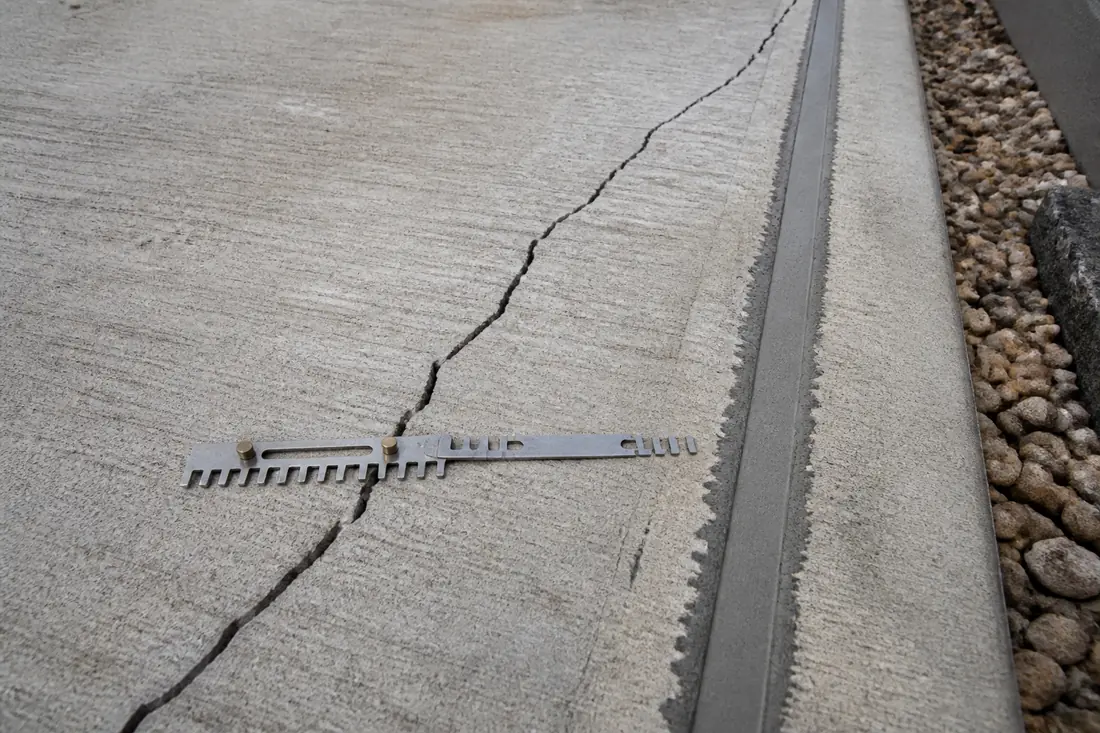
- Widening and vertical offset measured rather than eyeballed
- Active cracks distinguished from stable ones
- Stable cracks sealed to stop water entry and freeze damage
- Underlying settlement or base failure addressed where present
- Honest statement when the answer is replacement rather than repair
The Concrete Crack Repair Process
- 1
Step 1: Read the Crack
Width, direction, whether the two sides sit at different heights, and whether it crosses a joint. Direction and offset are the most informative details and separate shrinkage from movement.
- 2
Step 2: Establish Whether It Is Active
A crack that is still moving reopens through any filler. Measuring it, rather than assuming, is what determines whether sealing is worth doing at all.
- 3
Step 3: Deal With the Cause Where There Is One
Settlement, a washed-out base or water tracking along the slab edge. Sealing the crack without this is treating the symptom.
- 4
Step 4: Rout, Clean and Seal
Stable cracks routed to a proper profile, cleaned, and sealed with a flexible material that can take the small seasonal movement.
Types of Concrete Crack Repair in Boise
Driveway and Patio Crack Sealing
Stable cracks routed and sealed to keep water out of the slab and the base beneath it.
Control Joint Repair and Resealing
Failed or missing joint sealant replaced so the joints keep doing their job.
Structural Crack Assessment
Cracks that indicate movement rather than shrinkage, assessed before any repair is priced.
Panel Replacement
Where a slab section is cracked past repair, cutting out and repouring that panel rather than the whole slab.
What Matters When Choosing a Concrete Repair Contractor in Boise, ID
The base is inspected before anything is poured
Most slab failure in this climate starts underneath. Compaction, drainage and frost depth get checked and recorded before concrete is ordered.
Mix and thickness matched to the load
A driveway carrying vehicles and a garden path do not take the same slab. Thickness, mix strength and reinforcement are specified for the actual use.
Straight answers on repair versus replacement
Some slabs are worth lifting or resurfacing and some are past it. Which one yours is gets said plainly, before a price is attached to either.
Concrete Crack Repair FAQs
Are cracks in concrete normal?
Fine, tight, evenly spread shrinkage cracking is common as concrete cures and moves with temperature. What is not routine is a crack that keeps widening, one where the two sides sit at different heights, or one running through a slab that was properly jointed. Those indicate movement underneath.
Should I fill a crack myself?
On a stable, cosmetic crack a good sealant does a genuine job of keeping water out, which matters in a freeze-thaw climate. The risk is filling an active crack and assuming it is dealt with. If it has reopened before, or the sides are offset, that is worth looking at before spending more on filler.
Why does the crack keep coming back?
Because the slab is still moving. Filler does not stop movement, it just spans it until the movement exceeds what the material can take. A crack that reopens is not a failed repair so much as a report on what is happening underneath, and that is the thing to address.
When is a cracked slab beyond repair?
When it is cracked into multiple moving pieces, when the sides have offset significantly in height, or when repair costs have started recurring annually. At that point removal and replacement, with the base corrected, is usually better value than continuing to seal.
Other Services in Boise
- Concrete Slabs and PadsShed bases, garage slabs, RV and equipment pads, hot tub bases — sized for what actually sits on them.
- Concrete Sidewalks and WalkwaysPaths, walkways and public sidewalks poured to the slope and width the use — and the jurisdiction — requires.
- Concrete PatiosPoured patios sized, sloped and finished for outdoor living in a freeze-thaw climate.