
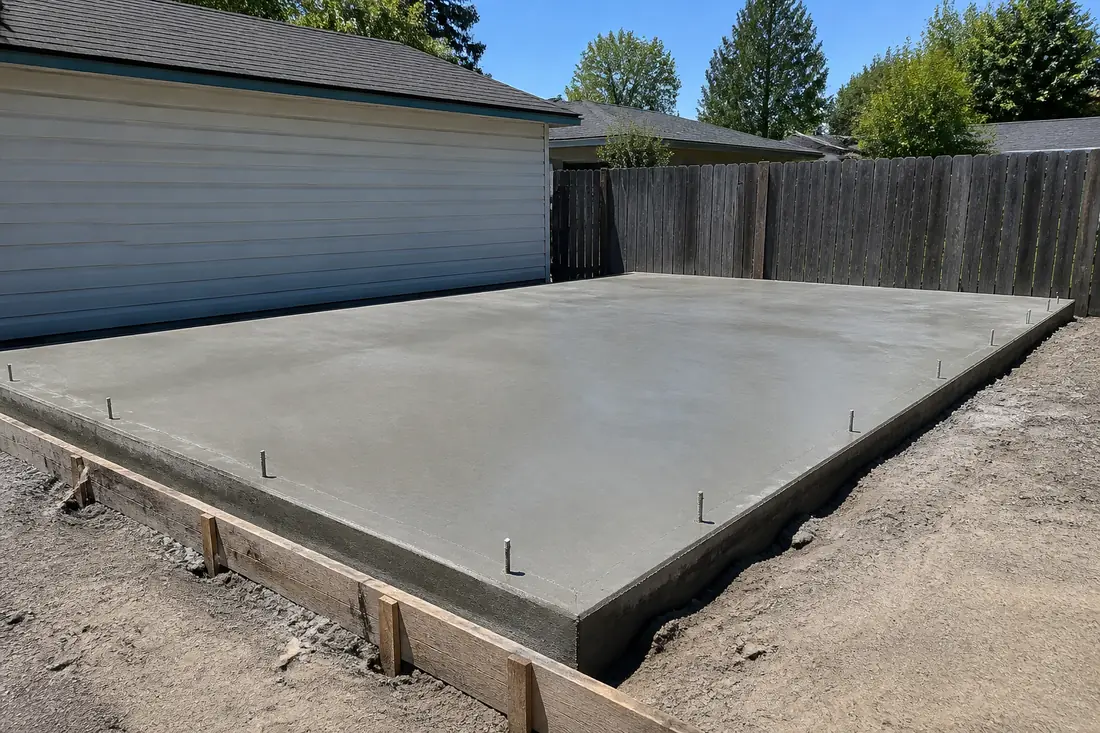
Concrete Slabs and Pads in Boise, ID — What to Expect
A pad is defined by its load. A shed base and a hot tub base look like the same slab and are not: a filled hot tub concentrates a very large weight on a small footprint, and a slab poured for garden storage will not carry it. The first question on any pad is what goes on it, filled and occupied, because everything downstream follows from that number.
The second question is what the pad sits on. River-terrace gravel across much of the valley floor compacts and drains well, which makes it good ground for slabs. Ground on the Bench and in the Foothills is often silt rather than gravel, and any pad placed on fill, on disturbed ground from earlier work, or on topsoil that was never stripped will settle regardless of how good the concrete is. That gets checked rather than assumed.
Frost matters on anything with a structure on it. A slab that heaves takes whatever is fixed to it along for the ride, so pads carrying buildings, posts or equipment are detailed for frost depth rather than floated on the surface. Which approach applies depends on the load, the structure and whether it is heated.
What Is Included
- Load established first — including filled and occupied weight
- Ground checked for fill, organics and previous disturbance
- Thickness and reinforcement sized to the actual load
- Frost detailing where a structure is fixed to the pad
- Conduit and plumbing sleeved before the pour, not cut in after
- Anchor bolts and hold-downs set while the concrete is plastic
The Concrete Slabs and Pads Process
- 1
Step 1: Establish the Load
What sits on the pad, at full working weight. A hot tub filled and occupied, a shed loaded, an RV with tanks full — the number that matters is the loaded one.
- 2
Step 2: Check What It Sits On
Whether the ground is native and compact or fill, disturbed or organic. Any of the last three changes the base preparation before it changes anything else.
- 3
Step 3: Sleeve and Set Before the Pour
Electrical conduit, plumbing and anchor bolts go in during forming. Cutting them in afterwards means cutting reinforcement and breaking the slab you just paid for.
- 4
Step 4: Pour, Level and Finish
Poured, levelled off where level matters, and finished to suit — smooth for equipment, broom where it gets walked on wet.
Types of Concrete Slabs and Pads in Boise
Shed and Outbuilding Bases
Pads sized and squared for a building, with anchor provision set during the pour.
Garage and Shop Slabs
Vehicle-rated slabs with thickened edges where walls land, sleeved for services.
Hot Tub and Spa Pads
Pads engineered for the concentrated load of a filled and occupied tub, which is far higher than people expect.
RV and Equipment Pads
Heavier slabs for vehicles, trailers, generators or HVAC units, with the load path considered rather than assumed.
What Matters When Choosing a Driveways and Patios Contractor in Boise, ID
The base is inspected before anything is poured
Most slab failure in this climate starts underneath. Compaction, drainage and frost depth get checked and recorded before concrete is ordered.
Mix and thickness matched to the load
A driveway carrying vehicles and a garden path do not take the same slab. Thickness, mix strength and reinforcement are specified for the actual use.
Straight answers on repair versus replacement
Some slabs are worth lifting or resurfacing and some are past it. Which one yours is gets said plainly, before a price is attached to either.
Concrete Slabs and Pads FAQs
How thick does a hot tub pad need to be?
Thicker than most people assume, because a filled tub with people in it is a very heavy load on a small footprint. The pad is sized from the manufacturer loaded weight for your specific model rather than a rule of thumb, and the ground under it matters as much as the slab.
Can a shed just sit on gravel?
For a small light shed, sometimes. A poured pad becomes worth it once the building is large, heavy, anchored, or holding anything that should stay dry and level. It also keeps the structure off the ground, which is what determines how long the bottom plate lasts.
Do I need to run power under the slab first?
If power or water is going to that structure, yes. Conduit and sleeves go in before the pour. Adding them afterwards means saw-cutting the slab and cutting reinforcement, which costs more than doing it first and leaves a permanent weak line.
Will a pad heave in winter?
It can, if it is a surface slab carrying something fixed and rigid. Pads with a structure anchored to them are detailed for frost rather than floated, and drainage around the pad does a lot of the work. Which approach applies depends on the load and whether the structure is heated.
Other Services in Boise
- Concrete Repair and ResurfacingFlaking, pitted and worn-out surfaces repaired or resurfaced, where the slab underneath is still solid.
- Concrete Leveling and Slab LiftingSunken driveways, walks and patios lifted back to level without breaking them out.
- Concrete PatiosPoured patios sized, sloped and finished for outdoor living in a freeze-thaw climate.