
Concrete Leveling and Slab Lifting in Boise, ID — What to Expect
Many sunken slabs are still structurally sound and are candidates for lifting rather than replacement. What has usually moved is underneath: base material that settled, fill that compressed under the weight, or soil washed out by water that found a path along the slab edge. Which of those it is, and what condition the slab itself is in, both get established before anything is lifted — because the answer decides whether lifting is the right call at all.
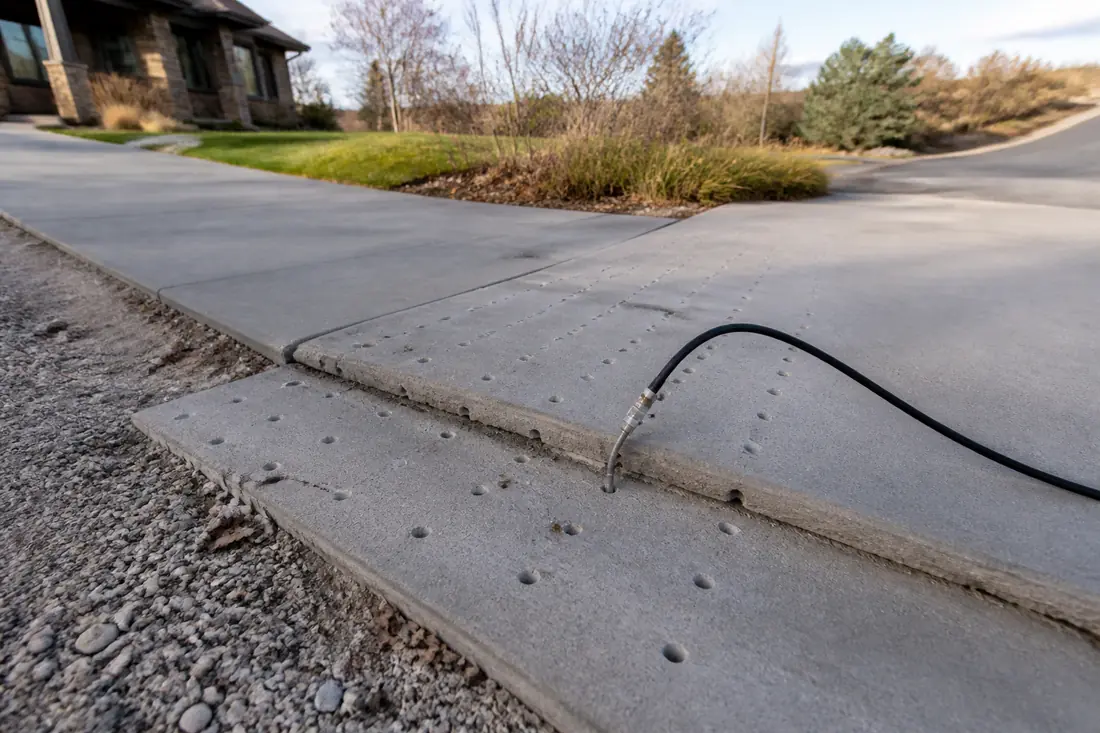
Lifting works by injecting material through small holes drilled in the slab, filling the void beneath and raising the concrete back to grade under controlled pressure. Polyurethane foam and cementitious slurry both do it, with different weights, cure times and costs. The slab goes back into service quickly and the cost sits well below removal and replacement.
What decides whether it is the right answer is the state of the concrete and the reason for the drop. A slab that is badly broken up will not lift as one piece, and a void caused by running water will simply reopen unless the water is dealt with at the same time. Both get established before anything is injected rather than discovered halfway through.
What Is Included
- Cause of the settlement identified before anything is lifted
- Slab condition assessed for whether it will lift in one piece
- Small injection holes rather than demolition
- Lift controlled and checked against a level as it goes
- Holes patched and the drainage cause addressed
- Honest comparison against the cost of replacement
The Concrete Leveling and Slab Lifting Process
- 1
Step 1: Find Out Why It Dropped
A settled base, fill still compressing, or soil washed out by water. Lifting a slab over an unresolved water path buys a season, not a fix.
- 2
Step 2: Assess Whether It Will Lift
A sound slab lifts as one piece. One that is already broken into fragments will not, and that is the point at which replacement is the honest recommendation.
- 3
Step 3: Drill, Inject and Raise
Small holes drilled through the slab, material injected to fill the void, and the slab raised under controlled pressure while the level is checked continuously.
- 4
Step 4: Patch and Fix the Cause
Injection holes patched, and whatever moved the water or the soil corrected, so the void does not simply form again.
Types of Concrete Leveling and Slab Lifting in Boise
Driveway and Approach Lifting
Settled driveway panels raised back to grade, including the step at the garage or the street.
Sidewalk and Walkway Leveling
Lifted or dropped walk sections levelled to remove trip hazards without replacing the panel.
Patio and Pool Deck Lifting
Slabs that have settled away from the house or toward it, corrected so water drains the right way again.
Garage and Interior Slab Lifting
Settled interior slabs raised where a floor has dropped relative to the foundation.
What Matters When Choosing a Concrete Repair Contractor in Boise, ID
The base is inspected before anything is poured
Most slab failure in this climate starts underneath. Compaction, drainage and frost depth get checked and recorded before concrete is ordered.
Mix and thickness matched to the load
A driveway carrying vehicles and a garden path do not take the same slab. Thickness, mix strength and reinforcement are specified for the actual use.
Straight answers on repair versus replacement
Some slabs are worth lifting or resurfacing and some are past it. Which one yours is gets said plainly, before a price is attached to either.
Concrete Leveling and Slab Lifting FAQs
Is lifting cheaper than replacing?
Usually by a substantial margin, because there is no demolition, no haulage and no new concrete. It is also far quicker to return to use. The comparison is only fair when the slab is genuinely sound, so both options get priced honestly rather than one being assumed.
How long does a lifted slab stay level?
That depends almost entirely on whether the cause was fixed. A void from a one-off settlement, filled and left alone, generally stays put. A void being scoured out by running water will reopen no matter what is injected into it, which is why the drainage gets addressed as part of the job.
Can any sunken slab be lifted?
No. A slab that has broken into multiple pieces will not rise as one, and pushing it will simply move the fragments relative to each other. Concrete that is badly flaked or broken up is past lifting, and saying so is more useful than taking the work.
What causes concrete to settle?
Usually something changing underneath rather than anything wrong with the slab. Common causes are fill that keeps compressing under load, a base that was never compacted in proper lifts, soil washed out by water tracking along a downspout or a slab edge, organic material left in place that has since broken down, and voids opening where a trench was backfilled loosely. Poor drainage makes most of them worse. Which one it is matters, because a one-off settlement that has finished moving is a different job from a void being actively scoured out by water.
Will the holes be visible?
The injection holes are small and get patched, but the patches are visible on close inspection, particularly on a colored or decorative surface. On a plain broom-finished driveway they blend quickly. It is worth knowing before rather than after.
Other Services in Boise
- Poured Foundation WallsCast-in-place basement, crawl space and stem walls, formed and reinforced to carry soil and building load.
- Concrete Repair and ResurfacingFlaking, pitted and worn-out surfaces repaired or resurfaced, where the slab underneath is still solid.
- Concrete DrivewaysNew driveways and full replacements, specified for vehicle loads and Treasure Valley freeze-thaw.