
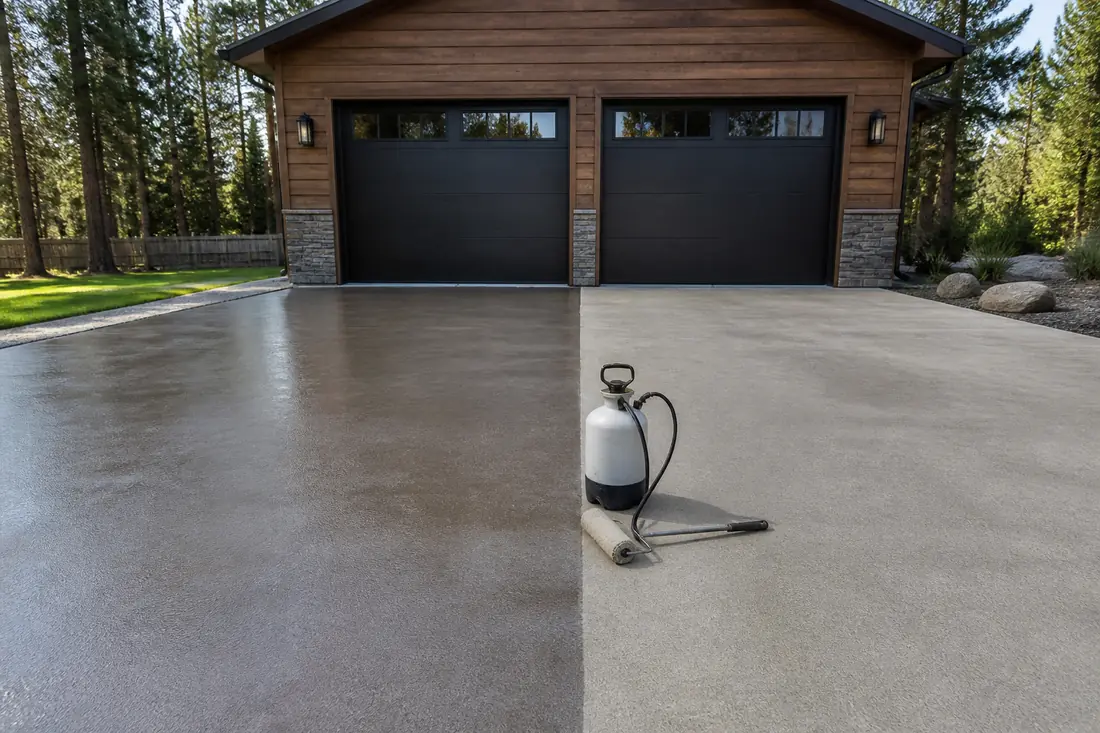
Concrete Sealing in Boise, ID — What to Expect
Concrete is porous. Water gets into the surface, freezes, expands and pushes the top layer apart from the inside. That single mechanism is behind most of the surface failure seen on driveways and patios in this climate, and it runs every winter whether anyone is watching or not.
De-icing salt makes it materially worse. It does not attack the concrete chemically so much as increase the number of freeze-thaw cycles the surface goes through and draw more water into it. A driveway that gets salted through winter is under considerably more stress than the same slab left alone, which is why sealing is worth more here than in a mild climate.
A sealer will not rescue concrete that is already failing. What it does is keep sound concrete sound, which makes timing the important part: new concrete sealed after it has properly cured, and existing sound concrete sealed on an interval. Sealing too early traps curing moisture and can cause the very damage it is meant to prevent.
What Is Included
- Slab condition assessed before sealing is recommended
- Timing on new concrete set after curing, not before
- Penetrating and film-forming sealers explained, not defaulted
- Surface cleaned and dry so the sealer bonds properly
- Slip resistance considered where the surface gets wet
- Reseal interval stated plainly at handover
The Concrete Sealing Process
- 1
Step 1: Assess Whether Sealing Is Worth It
Sealer preserves sound concrete. On a slab that is already flaking or moving it is money spent on a surface that is going anyway, and saying so is more useful than selling it.
- 2
Step 2: Choose the Sealer Type
Penetrating sealers soak in and change nothing visually. Film-forming sealers sit on top, add sheen and wear differently. Neither is better in general.
- 3
Step 3: Clean and Dry the Surface
Cleaned of dirt, oil and any previous coating, and properly dry. Sealer applied over contamination or moisture does not bond and lifts.
- 4
Step 4: Apply and State the Interval
Applied at the specified rate, with slip resistance added where the surface gets wet, and the reseal interval given so it is a known commitment.
Types of Concrete Sealing in Boise
Driveway Sealing
Protection against freeze-thaw and de-icing salt, which is the main wear mechanism on driveways here.
Patio and Walkway Sealing
Sealing on patios and walks, where how it looks matters as much as how it holds up, with grip taken into account.
Stamped and Decorative Sealing
Resealing on decorative surfaces, where the sealer also carries the color depth.
New Concrete Sealing
First sealing timed after proper curing rather than immediately, which is when it does harm.
What Matters When Choosing a Garage Floors and Sealing Contractor in Boise, ID
The base is inspected before anything is poured
Most slab failure in this climate starts underneath. Compaction, drainage and frost depth get checked and recorded before concrete is ordered.
Mix and thickness matched to the load
A driveway carrying vehicles and a garden path do not take the same slab. Thickness, mix strength and reinforcement are specified for the actual use.
Straight answers on repair versus replacement
Some slabs are worth lifting or resurfacing and some are past it. Which one yours is gets said plainly, before a price is attached to either.
Concrete Sealing FAQs
How soon can new concrete be sealed?
Not immediately. Concrete needs to cure before it is sealed, and sealing early traps moisture in the slab where it can cause exactly the surface damage the sealer is meant to prevent. The right window depends on the mix and the weather, so it is given for your specific pour.
How often should concrete be resealed?
On an interval rather than once, and the figure depends on the sealer type, the exposure and the traffic. A driveway that gets salted and driven on needs it more often than a sheltered patio. The interval for what was applied is stated at handover.
Does sealing stop cracking?
No. Sealing addresses water entering the surface, which is what makes a surface flake, pit and wear away. Cracking comes from shrinkage and movement, and no sealer prevents either. It is worth being clear on which problem you are solving.
Will sealer make the surface slippery?
A film-forming sealer can, particularly when wet. A non-slip additive can be included, and a penetrating sealer changes the surface texture very little. Where the surface gets wet or is walked on regularly, this is worth deciding before application.
Other Services in Boise
- Garage Floor CoatingEpoxy and polyaspartic floor systems over a properly prepared slab, with honest limits on each.
- Concrete Removal and ReplacementBreaking out failed concrete, correcting what was underneath, and pouring it back properly.
- Concrete Crack RepairReading what a crack means before filling it — shrinkage, movement or something structural.