
Concrete Footings in Boise, ID — What to Expect
A footing is the part of a structure that meets the ground and spreads a concentrated load across enough soil to carry it. A wall, a post or a column delivers weight to a small area; the footing widens that area until the pressure is something the soil can take without settling. Its size is worked out from the weight above and what the ground below can carry. It is not a standard dimension.
Depth is set by frost rather than by load. Ground that freezes beneath a footing expands and lifts whatever sits on it, and repeated seasons of that will move a deck, a post or a wall out of level permanently. Taking the footing below the local frost line puts it under the layer that moves, which is why the depth requirement exists and why it is inspected.
The most common failures here are avoidable. Footings poured on fill or on ground that was never compacted, footings undersized for the actual load, and footings that stop short of frost depth because the digging got hard. All three look identical the day they are poured and only reveal themselves seasons later, which is why the inspection before the pour is the one worth attending.
What Is Included
- Width and thickness calculated from load and bearing, not defaulted
- Depth taken below the frost line for the jurisdiction
- Bearing checked at the bottom of the excavation before pouring
- Reinforcement placed and supported off the base
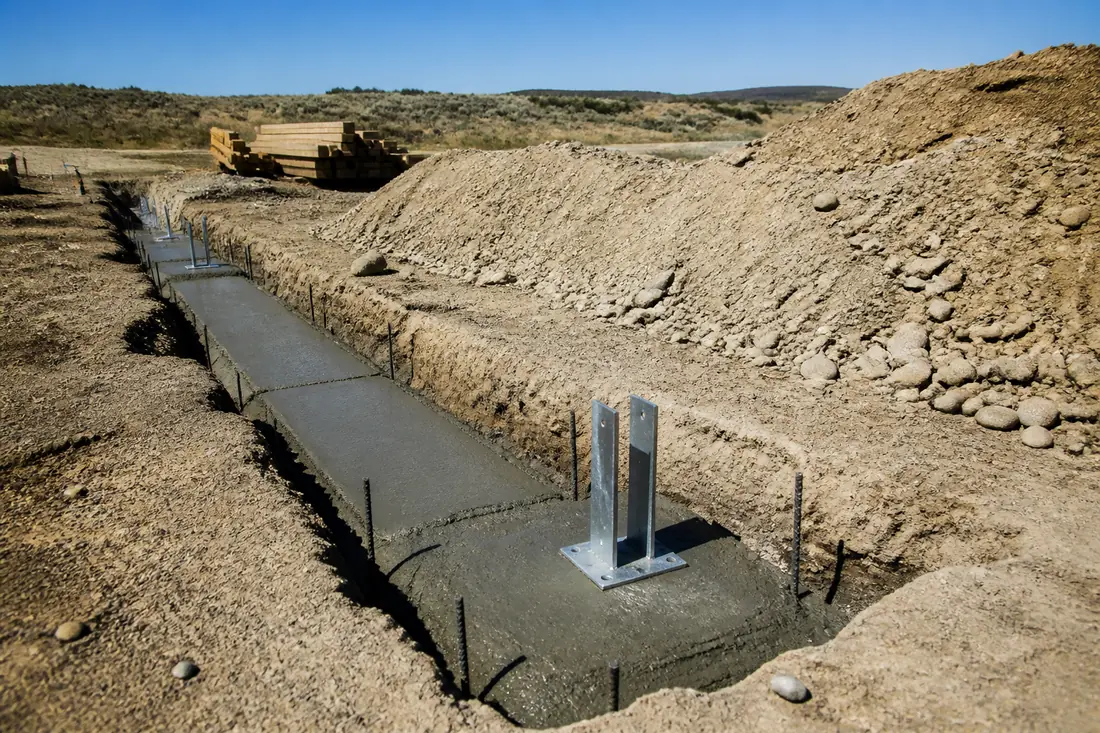
- Post bases, anchors and dowels set while the concrete is plastic
- Inspection hold points scheduled as part of the sequence
The Concrete Footings Process
- 1
Step 1: Calculate the Load and Check the Soil
What the footing has to carry, and how much weight the ground underneath can carry. Footing size comes out of those two numbers rather than from a standard detail.
- 2
Step 2: Excavate to Bearing and Below Frost
Dug to the depth the county requires, and down to ground solid enough to carry the load. If the bottom of the trench is fill or disturbed, that gets dealt with rather than poured over.
- 3
Step 3: Form, Reinforce and Inspect
Forms set, reinforcement placed and supported, and the inspection called before concrete is ordered. Once it is poured, nothing about it can be verified.
- 4
Step 4: Pour and Set the Connections
Placed and levelled, with post bases, anchor bolts or dowels set into the concrete while it is still wet, so the structure above ties into the footing properly.
Types of Concrete Footings in Boise
Strip and Wall Footings
Continuous footings under foundation and stem walls, spreading a line load along the ground.
Pad and Column Footings
Isolated pads under posts, columns and point loads, sized for a concentrated weight.
Deck and Porch Footings
Post footings below frost depth so the structure does not lift and drop with the seasons.
Underpinning and Thickened Edges
Footings extended or deepened where an existing structure needs additional bearing.
What Matters When Choosing a Foundations and Footings Contractor in Boise, ID
The base is inspected before anything is poured
Most slab failure in this climate starts underneath. Compaction, drainage and frost depth get checked and recorded before concrete is ordered.
Mix and thickness matched to the load
A driveway carrying vehicles and a garden path do not take the same slab. Thickness, mix strength and reinforcement are specified for the actual use.
Straight answers on repair versus replacement
Some slabs are worth lifting or resurfacing and some are past it. Which one yours is gets said plainly, before a price is attached to either.
Concrete Footings FAQs
How deep do footings need to be?
Below the frost line for your jurisdiction, and deeper if bearing soil requires it. Ground freezing under a footing lifts it, and repeating that each winter moves the structure permanently out of level. The governing depth is confirmed for your address rather than taken from a general figure.
How big does a footing need to be?
It is calculated, not standard. The load coming down and how much weight the soil can carry together set how wide the footing has to be. A heavier load or weaker soil means a wider footing. Copying a dimension from another site is the usual way this goes wrong.
Do deck posts need concrete footings?
In most cases yes, and they need to reach frost depth. A post on a shallow pad or set straight into the ground will heave over successive winters, which is why older decks pull away from the house or develop a noticeable slope. It is also normally inspected.
Can footings be poured on fill?
Not without dealing with it first. Fill and disturbed ground settle under load in a way undisturbed native soil does not, so a footing placed on them goes down with them. The options are excavating through to competent ground or engineering a solution, and which applies is established before pouring, not after.
Other Services in Boise
- Concrete Steps and StairsFront steps, stoops and exterior stairs, built to consistent rise and run and detailed against frost.
- Stamped and Decorative ConcreteStamped patterns, integral color and exposed aggregate, with honest limits on what each finish holds up to.
- Concrete FoundationsFoundations for new builds, additions, garages and shops — excavation, footings, walls and slab.